Amatis Trio
Myths & Legends
Jong, internationaal toptrio speelt werk van Schubert, Liszt en Mendelssohn
Young, international top trio plays works by Schubert, Liszt, and Mendelssohn
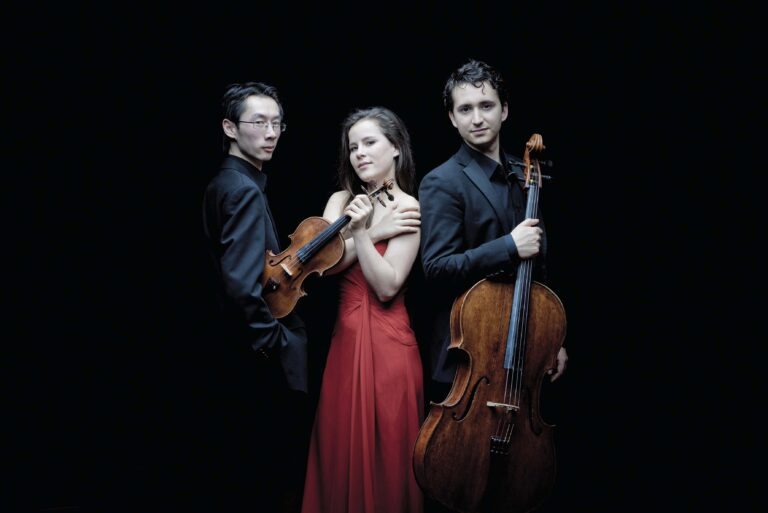
Het Amatis Trio behoort tot de internationale top van de jonge generatie pianotrio’s en speelt wereldwijd op de belangrijkste concertpodia en festivals. Het toonaangevende Britse magazine The Strad omschreef het spel van het in 2014 opgerichte ensemble als “meesterlijk en ronduit verbluffend”. Begin maart komt het trio naar Groningen met een wonderschoon programma.
Het Pianotrio nr. 1 in Bes, op. 99 van Franz Schubert is een van de meest sprankelende kamermuziekwerken uit zijn latere periode. Wat dit bijna veertig minuten durende trio bijzonder maakt, is de bijna symfonische rijkdom in klank en de eindeloze stroom aan melodieën; typisch Schubert, maar hier op zijn allerbest.
Tristia van Franz Liszt is een arrangement voor pianotrio van Vallée d’Obermann, dat weer een belangrijk deel is van de pianocyclus Années de Pèlerinage. Het is geen virtuoos showstuk, maar een diep doorleefde muzikale meditatie, donker en meeslepend.
Het Pianotrio nr. 2 in c van Felix Mendelssohn zit boordevol vuur en dramatiek. Waar zijn eerste pianotrio vaak wordt geprezen om zijn elegantie, laat Mendelssohn hier zijn meer donkere en gepassioneerdere kant horen. Een werk dat je meesleept van de eerste tot de laatste noot.
Programma
Franz Schubert (1797-1828)
Pianotrio nr. 1 in Bes op. 99, D 898
Franz Liszt (1811-1886)
Tristia (naar Vallée d’Obermann)
Felix Mendelssohn (1809-1847)
Pianotrio nr. 2 in c op. 66

Abonnement Kamermuziek i.s.m. GMV
Dit concert is onderdeel van abonnement Kamermuziek i.s.m. GMV en van Vrije keuze abonnement.
Abonnement Kamermuziek i.s.m. GMV gelijk bestellen
Abonnement Vrije keuze gelijk bestellen
The Amatis Trio ranks among the international elite of the young generation of piano trios and performs on major concert stages and festivals worldwide. The leading British magazine The Strad described the playing of the ensemble, founded in 2014, as “masterful and downright stunning.” In early March, the trio is coming to Groningen with a magnificent program.
The Piano Trio No. 1 in B-flat, Op. 99 by Franz Schubert is one of the most sparkling chamber music works from his later period. What makes this nearly forty-minute trio special is the almost symphonic richness of sound and the endless stream of melodies; typically Schubert, but here at his very best.
Tristia by Franz Liszt is an arrangement for piano trio of Vallée d’Obermann, which in turn is an important part of the piano cycle Années de Pèlerinage. It is not a virtuoso showpiece, but a deeply felt musical meditation, dark and compelling. Felix Mendelssohn’s Piano Trio No. 2 in C is bursting with fire and drama. While his first piano trio is often praised for its elegance, Mendelssohn reveals his darker and more passionate side here. A work that sweeps you along from the first to the last note.
Program
Franz Schubert (1797-1828)
Piano Trio No. 1 in B-flat, Op. 99, D 898
Franz Liszt (1811-1886)
Tristia (after Vallée d’Obermann)
Felix Mendelssohn (1809-1847)
Piano Trio No. 2 in C, Op. 66